Sales CRM in India: What Actually Works by Industry
Wiki Article
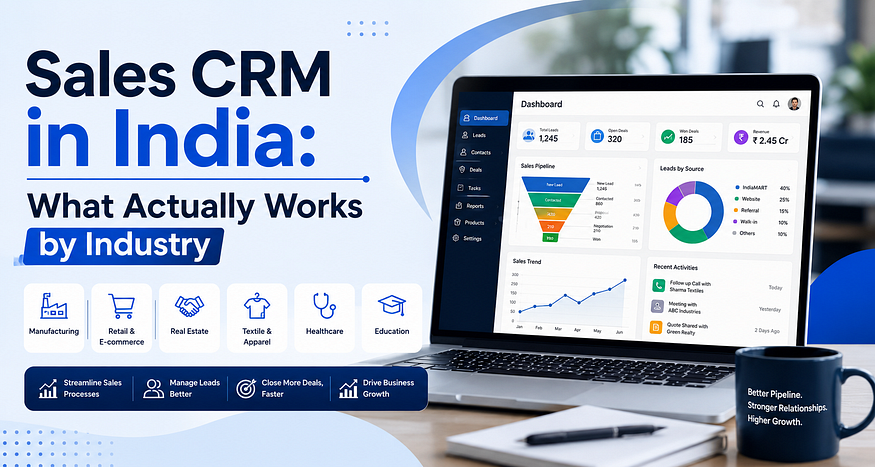
I’ve spent the last few years talking to sales teams across India brokers in Surat, machine parts dealers in Coimbatore, retail chains in Pune, and a handful of SaaS founders trying to sell software the way American blog posts told them to. Almost every one of them started the conversation the same way: “We don’t really need a CRM, we manage fine on WhatsApp and Excel.”
Most of them were wrong. Not because Excel is a bad tool, but because the moment a sales team crosses somewhere between 4 and 10 people, tracking leads by memory and spreadsheet stops scaling. Someone forgets to follow up. Two people message the same lead. A manager finds out a deal was lost three weeks after it happened, when there was nothing left to do about it.
What surprised me, though, is that the CRM that works for a real estate broker rarely works the same way for a manufacturing business, and what a retail chain needs looks almost nothing like what a SaaS company needs. The sales cycle, the primary channel, and the data that actually matters are different enough that “just get a CRM” isn’t useful advice on its own. Here’s what I’ve seen actually work, industry by industry.
Real Estate: Speed and Site-Visit Tracking Win
Real estate sales in India rarely close in a single conversation. Someone enquires in January, visits the site in February, negotiates with a father-in-law involved somewhere in March, and signs in April if at all. The sales cycle typically runs one to six months, and the primary channel is a mix of WhatsApp and physical site visits.
What a real estate CRM absolutely must track is visit history, which agent owns which lead, and follow-up cadence. Without that, two salespeople end up promising the same flat to two different families a genuinely common failure mode I’ve heard about from more than one builder.
Response speed matters more here than most agencies realize. Data from Indian property portals consistently shows that leads contacted within the first five minutes convert at meaningfully higher rates than leads contacted even an hour later. A CRM like Wortal.co, which pulls leads automatically from 99acres, Facebook, and WhatsApp into one pipeline, removes the manual copy-pasting that usually causes that delay in the first place.
Manufacturing: Quotations and Stock Levels Are the Real Battle
Manufacturing sales cycles run longer typically two to four months and the primary channel is still calls combined with IndiaMART enquiries, not email or social media. This is an industry where a lot of CRM vendors get the pitch wrong, because they design for retail-style quick decisions when the actual buyer is comparing quotations from three vendors over several weeks.
The CRM here needs to track quotations, stock levels, and exactly what negotiation stage a deal is sitting at. Without that visibility, sales teams end up quoting outdated prices, or worse, promising stock that’s already been committed to another buyer. I’ve seen this happen at a mid-size auto-parts supplier that was still tracking quotations in a shared Excel file three people were supposed to update nobody actually did, and pricing conflicts became a monthly headache until they moved to a proper system.
Retail: Response Speed and Repeat Buyers
Retail is the fastest-moving of the four. Sales cycles can run from minutes to a few days, and the primary channel is WhatsApp plus walk-ins. A retail CRM lives or dies on response speed, purchase history, and identifying repeat buyers because in retail, the second sale is almost always cheaper to win than the first.
What tends to trip up retail businesses is treating every customer as new. Without a system tracking purchase history, a returning customer gets the same generic pitch as a first-time visitor, and loyalty opportunities quietly disappear. Tools built with WhatsApp-first workflows, rather than email sequences bolted on as an afterthought, tend to fit Indian retail far better.
SaaS: Trial Usage and Renewal Risk
SaaS sales cycles in India typically run one to four weeks, shorter than the other three categories, and the primary channel is a mix of email and in-app engagement. The CRM needs to track trial usage, feature adoption, and renewal risk essentially, whether a user is actually getting value before the invoice arrives.
The biggest mistake I’ve seen SaaS founders make here is treating their CRM setup like a US playbook: cold email sequences, drip campaigns, and little else. Indian SaaS buyers, especially outside the top few metros, respond far better to a phone call or a WhatsApp message than a cold email thread. A CRM built around email-only workflows ends up fighting the market instead of working with it.
A Quick Side-by-Side
Industry Sales Cycle Length Primary Channel What the CRM Must Track Real Estate 1–6 months WhatsApp + Site Visits Visit history, agent ownership, follow-up cadence Manufacturing 2–4 months Calls + IndiaMART Quotations, stock levels, negotiation stage Retail Minutes to days WhatsApp + Walk-ins Response speed, purchase history, repeat buyers SaaS 1–4 weeks Email + In-app Trial usage, feature adoption, renewal risk
So, Is There One CRM That Works for All Four?
Not perfectly, no — but the closer a tool is built around Indian sales behavior specifically, the more of these boxes it tends to tick regardless of industry. Wortal, for instance, was built around the assumption that WhatsApp is where most Indian sales conversations actually happen, not email. It pulls leads from Facebook, IndiaMART, and WhatsApp into a single pipeline, logs calls automatically through a feature called WCaller so managers can see whether a lead was actually contacted, and prices per user in rupees rather than converting a US pricing model after the fact.
That doesn’t mean it’s automatically the right fit for every team reading this. A large builder running enterprise-scale inventory across a dozen projects may still need something heavier. A SaaS company running complex multi-touch attribution may want deeper marketing automation. The point isn’t that one tool wins every category — it’s that the closer you match a CRM’s design assumptions to how your industry actually sells, the less time your team spends fighting the software instead of using it.
Getting Started
If you’re evaluating a CRM for the first time, resist the urge to pick based on brand recognition alone. Start with the table above: figure out your actual sales cycle length, your real primary channel not the one you wish it was and the two or three data points your team argues about most when a deal falls through. That’s usually the exact list of things your CRM needs to track. Everything else is a feature you’ll pay for and rarely open.
Most teams I’ve watched go through this transition follow the same arc: messy manual tracking, a slightly awkward first few weeks with new software, and then a noticeable sense of relief once leads stop quietly disappearing. It’s rarely one dramatic feature that makes the difference. It’s just fewer gaps.
Report this wiki page